Thursday, August 17, 2006

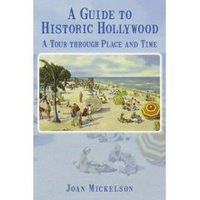
Joan Mickelson's "A Guide to Historic Hollywood FL"

When in the Fort Lauderdale area last November I spent a great deal of time photographing several historic districts of South Florida including Wilton Manors, Lauderdale By The Sea, Del Ray Beach, South Beach, Deerfield Beach, and Hollywood Florida. And while I enjoyed and appreciated the characteristics of each of the different areas the Hollywood Historic District and Hollywood Beach impressed me so much that I would comment to my close friend, Richard, that if I were to relocate to the Fort Lauderdale area that I would definately consider living in Hollywood FL.

I first heard of Hollywood Florida when in Fort Lauderdale for the March 2005 Winter Party which took place in South Beach Miami during which time I would meet Harold Flagg, a tourist consultant and author, based in the Fort Lauderdale area. Since then he has sometimes referred information to me pertaining to Hollywood FL.

So when I visited Fort Lauderdale in November 2005 Richard and I would visit the downtown historic district of Hollywood FL and then Hollywood Beach. Of all the beaches that I have visited, over the years, Hollywood Beach is one of two beaches where I would ever consider living. The other, Fire Island, would be during the summer months, lasting from May through September. Hollywood Beach, however, I would consider living ... all year round.

"R U still enamored of Hollywood?" was the subject of an email from Harold Flagg last night. The body of which referred me to the website of Joan Mickelson, PD.

Divided into two parts, A Guide to Historic Hollywood, by local historian Joan Mickelson—the daughter of a city founder—provides a history of Hollywood’s formative years as well as a guide through the historic streets of this beautiful Florida city. From the roaring twenties to the post-war fifties, Mickelson highlights the buildings, people and events vital to the history of this now thriving coastal landmark.

Still enamored with Hollywood, should I revisit Fort Lauderdale, in the fall of this year or anytime in the future, my hope is to revisit several of the areas that I've visited in the past, including Hollywood FL. Which is at the top of the list. Perhaps, while there, I'll connect with Joan Mickelson.

Wednesday, August 16, 2006

My YouTube "The Time Has Come Today (2006 NYC Gay Pride Parade)" Video

click above photo
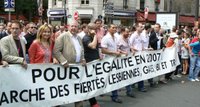
THE TIME HAS COME TODAY is an ongoing documentary project and ad campaign, and as a statement of my support of same-sex unions, attempts to creatively integrate my photography with 'music and historic speeches of the times' with hopes of bringing attention to the issue of equality rights. This particular installment, which represents my second such demo, samples images that I took during the 25 June 2006 New York City Heritage Pride Parade with the Chambers Brothers' 1968 gospel/protest song 'Time Has Come Today'.

Many more similar documentary projects will follow in the months to come. You, too, can broadcast yourself at Tube You.

Monday, August 14, 2006

Andy Warhol Stamp & Look-A-Like Contest

Living With Legends Chelsea Hotel blog dated 14 August 2006 informs that on 9 August 2006, in celebration of Andy Warhol's 78th birthday which took place on 6 August, the USPP issued a 37-cent Andy Warhol commemorative stamp at the Andy Warhol Museum in Pittsburgh, PA, which features Warhol's "Self-Portrait,1964."

The Allentown Art Museum hosted a Andy Warhol look alike contest at which a 16 year old boy would win the honors. At Gothamist, one may view a clip of Nico and the Velvet Underground rehearsing at The Factory in 1966.

Friday, August 04, 2006

Shock vs Awe (Naked Truth)

SHOCK vs AWE is not pornographic. Nor is it about sex, per se. A collection of provocative and erotic self-portraits integrated with hard hitting texts and excerpts from my writings pertaining to my experiences, as a black man. Which are often in sharp contrast to the experiences of my white counterpart. And when I say white counterpart I mean white friends, white colleagues, white associates and white lovers.

An auto-biographical photojournal, SHOCK vs AWE is about racism and my ongoing attempt to rise about oppression. Many of the images in SHOCK vs AWE will offend some. As will my writings. But not nearly as much as has the racism and social bigotry that many have inflicted and projected onto me.

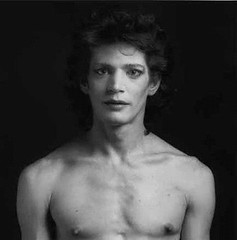
SHOCK vs AWE, a mutation of the ongoing THE NAKED TRUTH PROJECT, is a tribute to Robert Mapplethorpe. SHOCK vs AWE represents my weapon against racism.

Some angry black men might would've put a gun in their hands ...!

04 August 2006 Friday's Photo of the Week

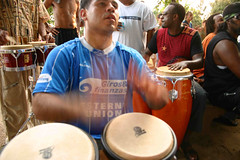
Taken on Sunday, 30 July 2006, in Meridian Hill (Malcolm X) Park during the weekly Drum Circle this picture along with all others from the Sunday, 30 July 2006 Drum Circle is part of my ongoing MOVEMENT-CHOREOPHOTOGRAPHY Project.

Dance and music are as much MY passions as is photography. So when photographing events such as a Drum Circle it is my practice to 'move amongst the musicians' as well as 'dance with the crowd'. My hope is that when others may see the collection of photos from a particular event that they will feel ... 'as if they were there!'.

I refer to such documentation as MOVEMENT-CHOREOPHOGRAPHY. This photo is the 4th installment of my 2006 Friday's Photo of the Week series.

Thursday, August 03, 2006

PARISmarais: 2006 Paris Gay Pride photos

This just in from Harold Flagg, a friend, in Fort Lauderdale:

Parismarais Newsletter, Issue 16, August 2006

Every year, we eagerly await all the spectacular summer events happening in Paris. And what a summer it’s been! Last month, we enjoyed the biggest Gay Pride Parade Paris has ever seen.

CVS Pharmacy . Dupont Circle West

A former Peoples Drug Store and located at the corner of Dupont Circle (west) and P Street this particular CVS Pharmacy would undergo an historic renovation' in 1992.

Contracted by Davis Construction Corporation and designed by Shalom Baranes Associates this highly visible project involved the comprehensive renovation of an existing retail drugstore while it remained in full operation. The 80-year-old building required a complete facade renovation, including the installation of new limestone, granite, brick and aluminum storefront. To update the building for current use and future tenant build-outs, the second and third floors underwent complete renovation, a new elevator was added, and new double-hung windows and skylights were installed in existing openings. New sprinkler and fire alarm systems were also installed, as well as handicap toilets and ramps to comply with ADA regulations.

Pertaining to the historic images displayed in the windows of the Dupont Circle West CVS Pharmacy, in a 2003 Topic Magazine article "Nostalgia For Sale", Sandy Zipp, a Washington native, who lives in Brooklyn and while working on a dissertation on culture and urbanism in Manhattan after World War II, says "Amidst the hurry and flurry, where P St. joins the circle on its western side, sits a CVS drugstore. In the display cases fronting P, CVS has given over its advertising space to a collection of historical photos depicting the Dupont Circle area at various moments of the twentieth century. Nine framed street scenes, ranging from 1923 to 1968, hover before three giant aerial backdrops of the city taken, from left to right, in 1986, 1938 and 1993."

And once I'm dead but gone ... images from my Dupont Circle Collection will then too be regarded as 'historic'. And may be will displayed in store front windows around the Circle.

The Dog Days of Summer

The Dog Days or the dog days of summer are typically the hottest and most humid times of the year. They are a phenomenon of the northern hemisphere where they usually fall between July and early September but the actual days vary greatly from region to region, depending on latitude and climate. Dog days can also define a time period or event that is very hot or stagnant.

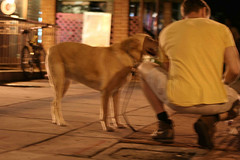
During the course of MY street phoptogrphy, in recent months, I have sometimes focused on people walking their dogs. Always regarding my photo walks as learning experiences when I've captured dogs, of recent, the intent was to try my hand at photographing dogs, with their masters, in natural settings. Images that I may take of dogs over the summer of 2006, in natural settings, will be featured in The Dog Days of Summer 2006 Project.

Wednesday, August 02, 2006

Summer X-Games . LA . 3- 6 August

The annual Summer X-Games will be held at the Staples Center in Los Angeles from 3 thru 6 August 2006. Over 300 of the world's best alternative sports athletes compete for medals and nearly US $1 million in cash.

The competitors defy gravity and test fate by launching off jumps, sliding down rails, spinning and flipping in a variety of sports.

Skateboarding action takes place in several disciplines - Street/Park, Vert and Luge. The Street event takes place on a specially-designed course with stairs, handrails and banks. Vert skating is performed on a vert ramp, where the skaters compete for singles and doubles titles on the huge halfpipe. The Street Luge is the final event, where the racers pilot highly-modified skateboards downhill at high speed.

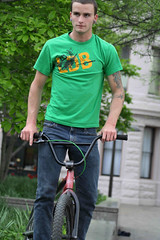
Though I've captured skateboarders in WDC, mostly in Freedom Plaza, since 1992, one of my first BMX photo sessions would take place at the Navy Memorial in October 2004 when I captured the Wartown Hoodlums Crew. Which until Easter Sunday 2006 when I'd happen upon Eric, from Fairfax VA, represented my favorite BMX and perhaps X Games series.

When capturing sports in action scenarios two of my many foci are "Hands" and "Tattoos and Other Taboos".

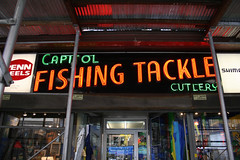
Hotel Chelsea's Capitol Fishing Tackle moves

Ed Hamilton of the Living With Legends Hotel Chelsea blog informs us in an 1 August entry that the "Capitol Fishing Tackle, which has been in its present location on the ground floor of the Chelsea Hotel for sixty-five years, is moving at the end of July. Since we’d never been in there before, my girlfriend Susan and I figured we should visit the store at least once, and maybe even buy something to show our support.

Inside the tackle store we looked at various lures and bobbers and sinkers, and finally decided on a cheap rod and reel to use to play with the cat who lives on our floor. At the register a tall, gaunt man with red, curly hair rang up our purchase, scarcely even glancing at us.

“I heard you guys were moving,” I said. “What happened? Did Stanley raise the rent on you?” Stanley Bard is the owner and manager of the hotel.

The man looked up. “Twenty-one-thousand he wants! Can you believe it? Up from nine-thousand he’s getting now.'"


When in NYC for the 2006 Saint at Large Black Party I spent the day on Saturday photographing areas of NYC that I had onced lived in or was very familiar with, including he Chelsea and Gramercy Park areas. After first taking take a few photographs of the exterior of the Capitol Fishing Tackle I'd step inside and mention to the staff that as a documentary photographer I may would like to return, in the future, to photograph the interior of the store. The woman behind the counter was very comfortable with me which, as a black male, I do not always find to be the case. She said, "By all means, we've been here for more than 60 years ...".

She insisted that I should feel comfortabe with taking pictures at that time. And older man staff person said 'You never know we may be here when you come back again!". I had a full day ahead me and did not want the staff nor community to get too suspicious about a black man rooming around the store and the streets with a camera (since I had many other places to visit) I said that I would wait until a future visit to NYC.

This story inspires me to be more vigilant when I'm in or near old stores such as the Capitol Fishing Tackle. As a documentary photographer, it concerns me that if I am not more vigilant I may miss the only opportunity to document and photograph the interior of an important part of the American culture. In many cases, these old stores have been there one day. And gone the next.

Tuesday, August 01, 2006

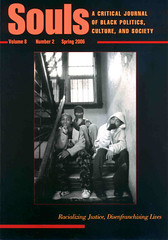
Souls Journal . Volume 8, Number 2 . Spring 2006

Black America is currently facing a challenge of great import that has far-reaching significance – the systemic removal of individuals from our community – because of policies inextricably linked to the criminal justice system. A felony conviction prevents individuals from voting in elections, from living in public housing, from finding employment and places an extraordinary burden on individual’s rehabilitation efforts. SOULS is interested in exploring the collateral consequences of the criminal justice system and publishing pieces that represent broad and varied perspectives of the criminal justice system and the collateral consequences of having a felony conviction.

With a cover photo by Helen M. Stummer entitled "Najee, Daquan, and Tyre, South 20th Street, Newark, Stairs" January 2004 and with accompanying text "Racializing Justice, Disenfranchising Lives" the Spring 2006 issue of the Souls Journal attempts to explore The Criminal Justice System and its Collateral Consequences. Featured articles include:

The Hyper-Criminalization of Black and Latino Male Youth in the Era of Mass Incarceration by Victor M. Rios

Jim Crow is Alive and Well in the 21st Century: Felony Disenfranchisement and the Continuing Struggle to Silence the African American Voice by Ryan Scott King

Reassessing Race Specificity in American Law and Public Policy by Lorenzo Morris and Donn G. Davis

Rehabilitated but Not Fit to Vote: A Comparative Racial Analysis of Disenfranchisement Laws by Keesha M. Middlemass

The Cactus that must not be Mistaken for a Pillow: White Racial Formation among Latinos by Daniel A. Rochmes and G. A. Elmer Griffin

Page 57 features my image entitled Cop Duty . 33rd March For Life . Supreme Court . Washington DC dated January 2006. See original photo.

What I like about Frank Muzzy

It was during my Easter Sunday Photo Walk through Dupont Circle that Jose would inquire of me if I knew who Frank Muzzy was. And when Jose mentioned that Muzzy had authored a book, Images of America: Gays and Lesbians in Washington DC and I then remembered that I heard him but, had never met him. I then said, to Jose, "What I like about Muzzy is that his work which is documentary and historical in nature not only attempts to shed light on the contributions that gays and lesbians make to society but, in the process, creates avenues and means by which gay and lesbian folk can tell their own story.

And while my focus is not, specifically, on the GLBT life and culture, the documentation of GLBT life and culture are as important to my work as are my foci pertaining to Afro-American and race issues. Neither which are the sum nor whole of my work.

And what I like about my work, specifically, which may be a bit different than that of Frank Muzzy is that without regards to race, color, creed, sexual orientation nor political persuasion I have strived to document, record and capture aspects of our society that may have nothing or little to do with afro-american history or gay culture. While also documenting gay life and black history.

On Thursday night, on my way home from an evening photo walk, I dropped in at the Green Lantern, for my third time in as many weeks. Maybe looking for a trick. But more, perhaps, simply because "I'm into the music". After ordering a bottle of water I'd sit on the stool to the right of the downstairs bar. During which time a man would walk up and say something to the effect "You must be a photographer...". To which I'd joking reply 'Yep, that's what it looks like!'. He'd then hand me an invitation flyer saying that he was opening a photographic exhibition on Saturday at Pulp on 14th Street. When I inquired as to the theme he said that his name was Frank Muzzy and that the show, entitled "Frankie Goes To Paris" , features architectural images that he had taken during a recent visit to Paris.

It was then that I would realize that he was the Frank Muzzy that Jose had spoke of on Easter Sunday. Wanting to bring attention to the show by posting an entry to my blog when I arrived home later that night I checked the web for Frank Muzzy.

And what I liked about what I found on the web about Frank Muzzy is his interest in history and documentation.

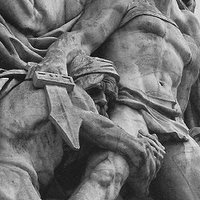
When I arrived at the New Art Exhibition on Saturday evening shortly before 8 PM I must say that I was quite impressed with Frank Muzzy's 'Frankie Goes To Paris'. A series of architectural images depicting homoeroticism found in Parisian statures, momuments, sculptures and architecture it brought to mind my architectural exploration in January 2006 when over the weekend of the 33rd March for Life that I would take a similar series photos in close proximity of the US Capitol.

During which time I would arouse so much suspicion from the police and out of concern that they would label me a terrorist I, immediately, would put the project on hold. What I like about Frank Muzzy is that his art and activism, since I first heard of him some years back on the TV news when his Images of America: Gays and Lesbians in Washington DC book was published, is that through his work Frank Muzzy not only inspires others to document and record their history but also challenges the individual to see life from a different perspective. As is the case with his images in the "Frankie Goes to Paris" exhibition.

What I like about Frank Muzzy are some of the similarities between or foci, including that of atrchitectural themes. My body of work and in particular prior to 11 September will indicate that I have always had n interest in architectural and historical photography.

What I liked about the Muzzy's "Frankie Goes to Paris" exhibition is that it has inspired me to resume my architectural, sculptural and monumental series.

What I liked about Frank Muzzy was the way that he approached me at the Green Lantern on the evening of 20 July who while joking 'You must be a photographer' handed me an invitation to the NEW ART EXHIBTION at the Pulp on 14th Street featuring the photographs of Frank Muzzy and the oil on canvas paintings by Dale Alward.

Alward's abstract and somewhat impressionistic exhibition, "A Sponge to Wipe Away the Weapon-Salve" exudes with emotions, is somewhat politcal and, yet, is dark, bold and personal in nature. Which I hope to review and comment on in a seperate entry, since this essay is about 'what I like about Frank Muzzy.'

Whether you'll straight, gay, black, white or whatever, may I suggest that you visit the NEW ART EXHIBITION at Pulp on 14th Street. The work of both artists, Frank Muzzy and Dale Alward are worth seeing. And while at Pulp on 14th Street you'll probably will find some other items that will tickle your fancy.

And while Frank Muzzy and I may have similar interests and foci as did Robert Mapplethorpe and I ... as gay white men ... I assure you that the life expereinces of Muzzy and Mapplethorpe are as different from mine as are night and day. So, perhaps, another difference between my documentary work and Muzzy is that I make it a point to integrate my writings with my photography.

Writings that reflect my experiecnes as a black gay man. As a documentary photographer I am always cognitive of the fact that a picture of a moment in time does not begin to tell the whole story. And, in fact, will often be used to misrepresent or distort the truth. You will note that whenever I post images to the web I always include, as part of its title, pertinent information pertaining to when and where it was taken. Similarly, when I hold exhibitions it is imperative that my writings be incorporated in the project.

While Frank Muzzy may have the freedom to travel to Paris and back again as did Mapplethorpe who traveled around the world ... I, as a 52 year old gay black man ... have not enjoyed the same freedoms. While, as a documentary photographer, I can easily connect with and appreciate Muzzy's work, it is imperative that my body of work speak on these issues.

What I like about Frank Muzzy ... is that he will be regarded as one the most important documentary artists of our times.

1O PM Curfew ... an example of hyper-criminalization of black and latino youth

DC Alliance of Youth Advocates Protest 10 pm Curfew

While working on various photo and writing projects and listening to Channel 8 News, yesterday, I'd hear two news reports that 'bothered me'. The first had to do with an apology made by Acting D.C. Police Second District Cmdr. Andy Solberg regarding his 10 July comment "... This is not a racial thing to say that black people are unusual in Georgetown ..." . Which I will discuss later in a seperate posting. But as does the second matter at hand it touches onto the subject of the "hyper-criminalization of black and brown youth" .

In response to the recent city's crime emergency officials, on 21 July, enacted the Enhanced Crime Prevention and Abatement Emergency Amendment Act of 2006. Which, among many proactive measures, calls for a 3 month 10PM Curfew for youth under the age of 18 to have taken affect last night which was Monday, 31 July 2006.

And while many will rationalize that "... it is not a racial thing ...", as a 52 year old gay black man who practiced integration I know that it is. Bothered by the news, I'd telephone a close friend in Fort Lauderdale saying "This is just another way for society to criminalize black and brown people and ... condition black and brown youth, at an early age, that their every move is being watched."

It had been last week that I would began writing the photoessay 'Need to be Watched" regarding a comment that a close friend that lives in NYC and who I have known for almost 25 years, expressed to me, in a telephone conversation saying '... you need to be watched ...'. A comment but more statement that 'bothered me' in same way as did the two news reports that I heard during the day on Monday, 31 July 2006.

When my white friend of European descent in his 60's would say what he said I'd demand that he "... please explain to me exactly why, as a 52 year black man, that I need to be watched ...". I would then add, "This is about racism ... and what impact do you think that watching me has had on my black life, over all these years."

He'd respond "... its for your protection. We love you!". I'd snap back, "It's has been my experience, as a black man, that it has not ever been about love. Nor my protection, at least, not for me. But what it is about is ... racism! And protecting the right for whites do drugs while policing, overseeing and dismantling the lives of black men.".

On Monday evening, 31 July, I'd telephone a close friend in Fort Lauderdale and ask if he had heard news of the curfew and of the incident regarding the police who said that that there are not many blacks in Georgetown. He said that he had not. I express this fact because it sheds light on how much these two news items 'affected me'. I'd say to him, that I hoped that black and brown kids will stage protests, in streets, after 10 PM. And then remind him, that aside from all the drugs that I had witnessed whites do and deal, over the years, it had been my experience that when ever white folks had come around me or had gotten close to me that they had created problems for me. These problems are what many refer to as criminalization. But others would claim that 'it is not about race!"

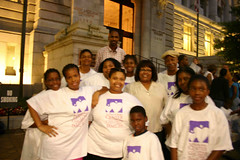
On Wednesday evening, 31 July 2006, the DC Alliance of Youth Advocates (DCAYA), a coalition of more than 50 youth-serving organizations, held an 8:30 pm press conference on the steps of John A. Wilson Building to speak out against the new 10 PM curfew just hours before the curfew the curfew was to have taken effect in the District of Columbia.

Speaking on the steps of the Wilson Building, members of the DC Alliance of Youth Advocates, including the National Center for Children and Families (NCCF), the Latin American Youth Center (LAYC) and Heads Up, emphasized the need to invest in the city’s young people, not to treat them as the cause of the city’s crime emergency.

The youth-serving organizations, all members of the DC Alliance of Youth Advocates, urged city leaders not to scapegoat youth, but to invest in needed youth development, job training, and educational programs that build the skills and confidence required for young people to succeed.
Dr. Sheryl Chapman, Board Member of the DC Alliance of Youth Advocates and Executive Director of the National Center for Children and Families (NCCF) , said "We agree with the mayor and the council’s objective of reducing crime in the District of Columbia. We need more then a 10pm curfew for youth to reduce crime. Youth need relationships to make different choices, i.e. to stay in school, to work and to not commit crimes. Our community needs to partner with parents and responsibly take on this "adult problem" including transitioning youth into adulthood. "

A Justice Policy Institute analysis of curfew policies in California found no evidence that they reduce crime. California counties with more restrictive curfew policies saw no decline in youth crime compared to those counties with less strict policies.

In the District, the city witnessed sharp declines in juvenile crime at the end of the 1990s, when there was no curfew. During this period -- between 1996 and the fall of 1999 -- arrests for several categories of juvenile crime dropped significantly. Arrests for juvenile robberies fell 65 %, aggravated assault dropped 39%, rape declined 89%, automobile theft declined 46% and burglary fell 45%.

While certain categories of juvenile crime, such as robbery, have increased this year, 94% of those arrested so far in DC have been adults, according to the Metropolitan Police Department. Out of 36 homicide arrests this year, only one was a youth.

Eshauna Smith, Executive Director of DCAYA, said, "A whole generation of young people is growing up with too few opportunities and not enough hope. We know there is a direct link between youth unemployment and youth violence. We know education is critical. We need to make investments in our youth, with a particular focus on education and job training."
The 10 PM curfew was one of the youth-related provisions of Mayor William’s emergency crime package, which passed the City Council on July 21st. The anti-crime package also included loosening confidentiality protections for youth being released from custody.

Maurice Wilkins, a youth leader in DC, said, "It’s simply not accurate -- and not fair -- to blame young people for the crime problem in our city. Unfortunately, it sends a powerful and harmful message that young people are part of the problem, not part of the solution."
The youth advocates expressed optimism that the 90-day emergency period could lead to additional knowledge about the effectiveness of different approaches to fighting crime.

DCAYA is a City-wide coalition that works to promote positive youth development programs and policies in the District of Columbia. Formed in 2003, DCAYA is a vehicle for providers and young people to engage in collective efforts to build developmental opportunities and safe spaces for adolescents, and to share best practices and local experiences with local officials.

When I arrived home from the 10 protest I'd stop in the lobby to pick-up my postal mail. And much to my delight I'd find two packages. The first contained a note pad that I had lost in South Boston VA when documenting the Juneteenth Celebration at the Berry Hill Plantation. Which Walter Potts had found and would send to me. I wrote about Mr. Potts and remarks that a young black male, Craig Keyes, made during the Juneteenth Celebration which speaks to the very subject matter that this posting speaks on.

And, finally, the second but larger package contained three copies of the Spring 2006 SOULS: A Critical Journal of Black Politics, Culture, And Society whose cover photo "Najee, Daquan, and Tyre . South 20th Street . Newark Stairs" dated January 2004 by Helen M. Stummer depicts three black teens sitting in a stairwell below which appears the text "Racializing Justice, Disenfranchising Lives".

And though not surprised since I was informed some back that the image would appear in the Spring 2006 issue, page 57 features my January 2006 "Cop Duty . 33rd Annual March for Life . Supreme Court WDC" photo.

The journal also features an essay by Victor M. Rios entitled "The Hyper-Criminalization of Black and Latino Male Youth in the Era of Mass Incarceration" which speaks to the very subject matter at hand. And sheds light on why, this 52 year black man, was bothered by the two news reports that he heard yesterday.

And while, on the surface, the 10 PM Curfew may not appear to be about race, as a 52 year old gay black man of Native American descent who, over the years, practiced integration I am hear to you, loud and clear that 'it is a race thing!'

Monday, July 31, 2006

Archie Edwards' Barbershop featured in Sunday's Washington Post

On 10 June 2006, I had hoped to trek out to Bunker Hill Road in NE WDC for the expressed purpose of visiting and capturing blues musicians performing at the Archie Edwards' Barbershop. But did not make there. Since then I have contemplated getting out there before it's too late. Apparently, time is running out.

Washington Post Metro Columunist Marc Fisher and his son recently visited the barber shop and would publish the following article in the Sunday, 30 July 2006 issue of the Washington Post.

A Barbershop of Chords but No Cuts Is Hanging On by a String
Washington PostBy Marc Fisher
Sunday, July 30, 2006; Page C01

In a dark barbershop on Bunker Hill Road, streaks of summer sun slant across acircle of guitar pickers. It's Saturday afternoon in Archie Edwards's old storein Northeast Washington, and an environmental lawyer, a Methodist minister, amaintenance man, a robotics researcher and a 10-year-old kid who's never beforeplayed the blues are traveling down the river together, a thousand miles awayfrom the hot city.

The Archie Edwards Blues Heritage Foundation's weekly jam session is underway.Door's open, there's a stack of plastic chairs in the back and you're welcometo widen the circle. Might want to hurry in, though, because the owner of thebuilding is fixing to sell it. All summer long, the situation has generatedenough anxiety that somebody might have to write a blues number about it.

Store's closed all the time except Saturday afternoons. That's when MichaelBaytop and a couple of the other gents who used to hang out at Edwards's AlphaTonsorial Barbershop unlock the door and take a seat. Over the next few hours,guitars will wander in, maybe a flute, surely a couple of folks withoutinstruments, newcomers who might just pick up a washboard and join in.

Back when Edwards was alive, Baytop would stop in around noon, when theproprietor was busy with the razor. "At about 2 o'clock he'd say, 'Okay, donecutting hair for today,' " Baytop recalls. "Somebody would say, 'I've beenwaiting two hours,' and Archie would say, 'You can come back Monday.' "

Now there's only one barber's chair left in the place, a shiny green swivelchair that hasn't generated a dollar in haircut revenue since 1998, when Mr.Edwards passed. Baytop had spent a dozen years of Saturdays learning theacoustic Piedmont blues and listening to the old guys' stories, and he wasn'tabout to let that go. He and some of the other players decided to keep thebarbershop going."

Everybody told us we were crazy: 'You don't know nothing about running abarbershop,' " Baytop remembers. "I said, 'That's okay. We're not going to cutany hair.' "

Somehow, the place just kept going. The old musicians -- some of the top namesin D.C. blues history -- welcomed any and all. Saturdays became a time forplaying, teaching and just wading in the music. Star players from across thecontinent showed up. So did film crews from Finland, Japan, Israel.

When the rent on Edwards's shop came due, the players took donations.Eventually, they made some CDs and organized some concerts to meet the rentbill, which was $100 a month when Edwards died. These days, it's $300, whichjust about covers the property tax and certainly nothing more. Which is why thetrustees for the owner, an aged woman named Helen Loftus, have decided it'stime to sell.

"Her trustee decided to liquidate her assets," says Ray Ruppert, the real estateman who manages the property, which is on a quiet little retail stripconsisting of a security agency, a law office, a balloon shop, an Africanculture center, a dentist and a dance school.

"When I asked Mr. Ruppert if he'd thought about donating the place to us, he laughed and said, 'That's what I thought we already did,' " says Patrick Casey,a lawyer from Chevy Chase who spends his Saturdays playing slide guitar at the shop.

One of Baytop's relatives, Jeff Sibert, an ex-barber himself, has proposed tobuy the property, which includes the store next door, and save the barbershop for the blues.

Sibert and Ruppert have just struck a tentative deal, under which Sibert willtry to rent out the adjacent storefront at market rate and use that revenue tokeep the music going in the barbershop, which he would renovate.

In a city where rents seem rocket-propelled and retailers hungrily snap upalmost any space, the barbershop has managed to sit unchanged. Two bottles ofelectric green Jeris Hair Tonic sit on the shelf, just where Edwards last usedthem. There's a black-and-white TV under the mirror and a 1950s radio consoleup front.

On the wall in the back, some old jottings of Edwards's are framed,lyrics to a song about John F. Kennedy, and some other lines, too: "If youdon't like my peaches, why don't you stop shaking my tree; if you don't stopshaking my tree, just come out of my orchard and leave my peaches to me."

A coffee can labeled "Donations" sits on the shelf. There's maybe $6 in it.

"It's not like the symphony with its patrons," Baytop says. "People who love the blues got the blues."

As word spread about the real estate situation this summer, local musicians called and wrote with support. There have been crises before, and every timethe shop is threatened, "no matter what we've needed, it's almost like theBible said, 'Speak and ye shall be given,' " Baytop says. When the societyneeded to set itself up as a nonprofit group, "I swear, guy walks through thedoor, harmonica on his hip, and he's a lawyer working with nonprofits and heasks if we need any help with that. His firm gave us $7,000 of legal work."

Miles Spicer, a guitar player and treasurer of the foundation who works forCareFirst BlueCross BlueShield, keeps a mental catalogue of the foreignvisitors who drop by and then head home to spread the gospel of the barbershop. "They come back every year or two, or they send their friends," he says. "And some of them come to play with us. Most anyone can learn this; if you fall inwith the right people and turn off the television, it doesn't take long."

My son, who is 10, plays a bit of piano but hadn't attempted the blues. The barbershop adopted him, and inside of 20 minutes he was leading a dozenmusicians in an extended jam.

Jim Lande, the clarinet man, who carves the wooden bones that anyone who pops incan pick up to join the rhythm section, leans over to tell my son "a little secret: If you get the rhythm right, people don't worry so much about the notes."

Maybe Sibert is the latest in a series of miracles that have kept the home ofthe blues open. Maybe not. But on Saturday afternoons on Bunker Hill Road,there's no anxiety in the air. The rhythm is right, and ain't nobody worrying so much about the notes.

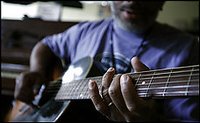
Photo description and credit: Miles Spicer plays with friends during the weekly jam session at the Alpha Tonsorial Barbershop in Northeast. The rent has been $300, but now the trustees for the owner want to sell the property. (By Lucian Perkins -- The Washington Post)

Mark Francis Nickens (Msawbe)

In the process of my ongoing Street Musicians series I have photographed solo guitarist Mark Francis Nickens since 1992. However, I would not learn his name until December 2005 when we would exchange contact information. During which time I wouild learn that he also goes by Msawbe.

Of recent, I have observed and photographed Mark performing as a street musican, most often, at the Dupont Circle South Station on Friday evenings. To learn more about Mark visit his website where you can also listen to and download some of his music.

To hear Mark perform live, as a street musician, stop by the Dupont Circle Station, south exit, on Friday evenings. He is one of the few street musicians that draws a crowd as well as admiring fans who often drop by on Friday evenings to hear and say hello to him.

Sunday, July 30, 2006

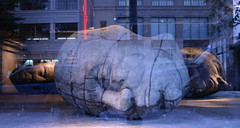
Ledelle Moe's Memorial (Collapse) @ Lofts 14 Two in Logan Circle

When capturing Windows on 14th Street during my 28 July 2006 Friday Photo Walk through the Logan Circle area I would be pleasantly surprised to happen upon Ledelle Moe's Memorial (Collapse) at Lofts 14 Two. Which in the past year or more when I've passed through this area I have sometimes photographed Men at Work. In fact, it was one of my July 2005 14th Street Men At Work photos taken at this very location during the early stages of the construction of Lofts 14 Two that has been featured in the websites of several construction companies.

Since it was late in the day and the construction workers had long since gone my focus, for the evening, was pedestrians at the intersection of 14th and P Streets and windows along 14th Street. And even if it I had not been focusing on windows the 3 headed display would have been hard to miss. Almost as if the heads of 3 construction workers had fallen from the sky or from the roof of Loft 14 Two and landed onto the concrete floor of the interior of an unfinished store.

The first exhibition of "Collapse" was launched in the summer of 2005 in Durban, South Africa. Moe created a second version in October for the Anderson Gallery at Drake University in Des Moines, Iowa. A third incarnation, exhibited at George Mason University's Fine Arts Gallery from 31 January 31 through 3 March 2006.

On display until 20 September the collaborative efforts of G Fine Art and Metropolis Development Company has landed Ledelle Moe's "Memorial (Collapse)" smack down onto the concrete floor and industrial space of a yet to be opened store located on the ground level of Lofts 14 Two at 1520 14th Street. Once finalized plans for a September official opening of the Memorial (Collapse) installation will be posted to the G- Fine Art website.

Not to be confused with Lofts 14 which, across the street, is located at the northwest corner of 14th and Church Streets.

Ledelle Moe works in the Washington DC area and teaches sculpture at the Maryland Institute College ofArt.

Saturday, July 29, 2006

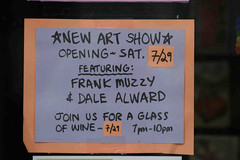
New Art Show: Frank Muzzy + Dale Alward @ Pulp on 14th

A NEW ART SHOW featuring the work of Frank Muzzy and Dale Alward will be on display at Pulp on 14th at 1803 14th Street, in NW WDC, from 29 July - 14 October 2006. Frank Muzzy, a well known WDC photographer, gay artist and author of several books including "Images of America: Gay and Lesbian Washington, DC" recently visited Paris and as a result has curated some of his images in the "Frankie Goes to Paris" exhibition.

Dale Alward 's exhibition, entilted 'A Sponge To Wipe Away The Weapon-Salve' is a social and political statement against George Bush and his admistration. Eight 32 x 34 oil on canvas paintings sheds light on the 17th century theory that instead of treating or healing the wound it was the practice to treat the weapons. In some cases using oil based salves. The Opening Reception will be held tonight which is Saturday, 29 July 2006, from 7 to 10 pm.

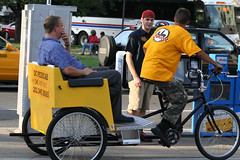
DC PediCab ... wheel get ya there!

Taking a cue from similar human-powered transportation that has been thriving overseas for well over a century, DC Pedicab is the premier pedal-powered taxi service in Washington DC.

Committed to changing the way people think about transportation in our nation’s capital DC Pedicabs are not only environmentally-friendly, but are also much faster and relaxing than walking, definitely more exciting than taking a traditional taxi cab, bus, or Metrorail service, and are capable of maneuvering through heavily congested city traffic with ease. The state-of-the-art fleet of bike taxis set the standard for entertainment-based transportation in the Washington DC.

Images that I may take, in the future, of DC PediCab will be tagged as DC-Pedicab and included in the DC PediCab photoset.

Friday, July 28, 2006

DMX @ Dupont Circle South . Friday evening, 28 July

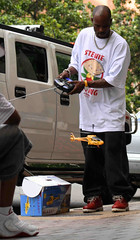
Having just captured pedestrians along Connecticut Avenue in the Farrugut North area in the course of my Friday photo walk I'd head north to Dupont Circle where along the way, just north of O Street, I'd happen upon a Golden Triangle consultant walking south who, aware of my street photography in the area, would alert me that DMX was just a few feet ahead. Thanking him, I'd continue north where moments later I'd observe DMX and his crew in front of the cellular Mobile Store on the east sidewalk of 1350 Connecticut Avenue toying with a remote control helicopter. When I'd position myself to take a few photos one of his crew would say that I could take a few photos but not too many. I'd thank him and hand him my flyer, saying "the photos would be posted later tonight at flickr and my blog".

DMX was scheduled for a 9 PM performance at Love located at 1350 Oakie Street, in NE WDC.

DMX was born Earl Simmons in Baltimore, MD, on December 18, 1970. He moved with part of his family to the New York City suburb of Yonkers while still a young child. A troubled and abusive childhood turned him violent, and he spent a great deal of time living in group homes and surviving on the streets via robbery, which led to several run-ins with the law.

Following the deaths of Tupac Shakur and the Notorious B.I.G., DMX took over as the reigning, undisputed king of hardcore rap. He was that rare commodity: a commercial powerhouse with artistic and street credibility to spare. His rapid ascent to stardom was actually almost a decade in the making, which gave him a chance to develop the theatrical image that made him one of rap's most distinctive personalities during his heyday.

Continuing north in the direction of Dupont Circle I'd think myself, 'while DMX is in town, I'd love to get a few shots of him in connection with my ongoing NAKED TRUTH PROJECT.

Thomas Brown, keeping watch ...

It is not always so easy for me to seperate myself from the subjects that I meet, interview and/or photograph in the course of my photojournalism. As was the case when on 28 January 2006 that I would meet Ken Wyban at 21 N Street, in SE. Earlier that Sunday afternoon I photographed many of the buildings in the area including 84 N Street which is at the corner of First and N Streets directly across from the Southwest Federal Center and Navy Yard. Whereas 21 N Street is in the opposite direction and on the other side of N Street nearest to South Capitol Street.

It was when I would return to the area on 6 February which supposedly was the last day for the residents and tenants in the area to remain in their respective places that I would first meet, interview and photograph Joe Woodbridge, the owner and operator of District Transmission for more than 37 years. Though most had already vacated by 6 February, a few including District Transmission had not. However, an extension would give them another month, until 6 March when all residents, tenants and owners of business was to have vacated. I would return on 7 March which was the day after.

Over the next few weeks and months I would often return to the area and on some occasions reconnect with either the father or the son, keeping up on the developments and status in finding a new place to relocate to in the PG County area. My photo of his son with two other men was published in the May 2006 issue of The Washington Spark.

When I would return to the area on Wednesday, 26 July 2006 though most of the buildings have been demolished or are vacant I had a feeling that someone would still be at 84 N Street in SE WDC. From a distance I'd observe that the door was open. I walked within a few feet of the opened door, peeped in but, at first, did not see anyone. As I began to walk away, a man stepped out side and said 'Hey!'

Glad to see him I'd ask if he was one of the three men that I had interviewed and photographed in February. He said that he was not sure but that he remembered me. Apparently, after the posting of my photos to flickr several other news gatherers had visited the shop and had interviewed Mr. Woodbridge and his son.

I asked if I coluld step inside and take a few photos of him and get some update on the status of Joe Woodbridge 's transition. He said yes . After introducing myself to him and shaking his hand I asked 'What is your name?"

He said "Thomas Brown". I would then inquire if he stayed there. He said yes ... so to speak ... and that he was watching over the place for Mr. Woodbridge making sure that things are ok. Now 64 years of age, Mr. Brown was born in Queens NY and moved to the WDC area since he was 48. An advantage of being so close to the construction projects is that he sometimes gets demolition work.

Handing him a $5 bill, I'd thank him for his time and said that I would return in a few days with the photos and a copy of the issue of the old Washington Spark that published the photo of the 3 men from District Transmission.

It is not always easy for me to seperate myself from the subjects that I meet, interview and photograph ...

28 July 2006 Friday's Photo of the Week

JAYWALKING (Pedestrians)

I actually would start a pedestrians series in December 2005 during the first snow storm when I positioned myself at the intersection of Connectiocut Avenue and K Street just outside of the Farragut North Station capturing pedestrians milling about the street through the snow and rain mixture. I would return to the same location during the 2nd and 3rd snows, each time walking north to Dupont Circle and then back again and then reboarding the subway at Farrragut North Station for my return trip home.

A few weeks ago when I got caught in the rain, twice in the same week and over as many days while standing under a bus stop on Connecticut Avenue and N Street on the first day and then under the courtyard at 1350 Connecticut Avenue, just south of Dupont Circle, on the second day I would capture folks that were caught in the rain, milling about in the streets, some with umbrellas. Many who jaywalked. It was then that Jay Leno's Jay Walking series would come to mind and the birth of the my now ongoing Jay Walking (Pedestrians) Project. Which has less to do with "jaywalking" and everything to do with "capturing moments in time that can not ever be again!".

Though the project would first begin at the intersection of Connecticut Avenue and K Street I have since positioned myself at other locations along Connecticut Avenue, namely at Connecticut and L and Connecticut and N as well as in the courtyard at 1350 Connecticut Avenue.

And then, last Thursday, I'd began a Jay Walking series along 14th Street, in the Logan Circle area. At first at 14th and P Streets and then at 14th and Rhode Island Avenue.

Thursday, July 27, 2006

Washington Area Bicyclist Association

In recent weeks I have ventured downtown in the late afternoon to early evening for the purpose of photographing and capturing the pedestrian and vehicular traffic, mass transit and perhaps other means of transportation. And as a result wish now to bring attention to the Washington Area Bicyclist Association.

In 1972, more bicycles were sold than automobiles for the first time in the century. That same year, WABA founder Cary S. Shaw realized that the urban transportation system in the Washington DC Area was not friendly to cyclists. While other cyclists shared the same problems he did, “they did not perceive it as a general problem,” Shaw recalled. “Someone caught their bike in a grate—they thought, well, they just caught their bike in a grate—but I could relate to the fact that that was a problem in grate design.

The greater Washington DC area is one of the greatest metro areas for riding a bike. WABA has been proactive in creating an ever-expanding network of scenic bike paths great for getting a workout or just getting to work. Highlights of this network include Virginia's Mount Vernon Trail, DC's Capital Crescent Trail, and Maryland's Anacostia Tributary Trail System. See a clickable map of the bike path network.

On Sunday, August 6, City Bikes will hold Washington DC’s only professional bike race. This annual event races around RFK Stadium’s old gran prix course. Come watch the exciting, fast pace racing or participate yourself! Along with Categories 1-5 racing, WABA is sponsoring an open course fun ride at 1:30pm for active members, and will be grilling up food for all the racers.

To join or learn more about WABA visit www.waba.org.

Wednesday, July 26, 2006

Dan McGeorge, at work, in SE WDC

Dan McGeorge, a fine art photographer, lives in California but would recently travel to WDC to assist his son, a Marine, in the renovation of an old rowhouse that his son purchased, less than two months ago, in the Capper Carrollsburg area of SE WDC.

Located in the 1000 block of 3rd Street between K and L Streets, in SE, it is amongst one of two sections of old rowhouses in the Capper Carrollsburg Community that will not be demolished. An alley seperates this section of old row houses from the section of Capper Carrollsburg once known as The Projects and that, recently, were demolished to make way for the construction of 280+ new 3 and 4 story row houses. This particular section of new row houses, yet to be constructed, will face 4th Street while its rear will run parallel with the rear of the seciotn of old row houses whose front facades face 3rd Street.

The second section of old row houses that will remain intact is located one block east on 5th between K and I Streets, directly across the street from the new Capper Carrollsburg Senior #1. When I inquired if he knew the circumstances as to why these two particular sections of old row houses were not being demolished Mr. McGeorge said, according to rumor, the land is the property of a private owner who refuses to sell. Whereas, the lots that had been demolished were The Projects owned by the city. Which brought to mind the old red building, known as the Star Market, at the corner of 2nd and L Street which still stands even after the March 2006 completion of the newly constructed Navy Yard Marriot Courtyard. Shortly afterwards, the private owner who previously had refused to sell, offered the Star Market for sale on Craig's List.

This series of images of Dan McGeorge will be included in my ongoing Men at Work - Capper Carrollsburg Project and may be included in a future Men At Work photographic exhibition.

While in town, I hope that Mr. McGeorge has the opportunity to visit the Corcoran Gallery of Art to view the redefined: Modern and Contemporay Art from the Collection and Robert Weingarten palette series exhibitions.

Mike Maher w/ the Caroline Boys & a Girl

In the course of my 23 July 2006 Sunday Photo Walk when passing through the 1400 block of P Street in Logan Circle I'd happen upon a group of musicians performing in front of the Whole Foods Market. It was last Halloween that I began my Whole Foods Market at Logan Circle project and since then, cognitive of the historic value of such images, when passing through the area I have sometimes snapped pictures using the Whole Foods Market as a backdrop.

Mentioning to the group that musicians have been amongst my ongoing themes since 1992 I'd ask if they objected to me capturing them, consentually but candidly. When inquiring if the group had a name one of the men dancers, dressed in black, said that the group did not have an official name but that the leader was Mike Maher. I wouild then ask them for their names, going from left to right.

Aron Rider, was the cellist, while Danny Villanueva was on percussion. Mike Maher, the leader played the banjo and the mandolin. Jeff Lopez was strumming his mandolin. And the two dancers, dressed in black, were Dan Bokor and Zak Sandler.

Once I got home and had time some to review the photos, having been quite pleased with the results I would then telephone Mike Maher informing him that I planned to do a brief write up on him and the group and asked that he provide me with some bio information pertaining to himself and the group. Having already checked the web for Mike Maher I had found several sites that I thought pertained to him. And others that did not. When I mentioned this to him he said there was something on the web regarding his performances at the Kennedy Center's Millennium Stage which I had already come across but had not yet listened to.

On the next day, which was Monday, I'd take the time to listen to the 11 Octber 2001 Millennium Stage performance at the Kennedy Center and was very impressed. Remembering my June 2006 visit South Boston VA when I'd become more acquainted with The Prizery I'd email Mr. Maher suggesting that he contact Chris Jones at the Prizery for possible future events. And would, again, reiterarate that he provide me with some historical and bio information pertaining to himself and the group which during our telephone conversation on the night before he had referred to as the Caroline Boys and A Girl Band.

On Wednesday, I would receive an email reply from Mr. Maher with the following information.

Caroline Mountain Boys (& a girl) are all part of the pit orchestra for the musical Caroline, Or Change, that ran for 10 weeks at the Studio Theater at 14th & P Street. The "band" started with myself and Jeff Lopez when Jeff wanted to learn some of the oldtime repertoire. They played at various locations in the Logan Circle area between shows on the weekends, including in front of the Whole Foods Market and Starbuck's on P Street and several times at Sparky's a few blocks north on 14th.

In the last few weeks cellist Aron Rider would them them. Mr. Maher says further that though "it's a non-traditional instrument for the style ... she has a fantastic ear and feel for the music which made her fit right in."

"We drew a crowd several times and lots of attention - a Whole Foods representative took our card for possible booking in the future. We were not really thinking of booking the group, only playing for our own enjoyment. Since the show closed last week, our oldtime P street band will probably not be heard again down there anytime soon."

And that's a damn shame because, apparently, not only did I enjoy them for a brief moment on Sunday evening, 23 July 2006, but so did many others over the preceeding weeks.

Mike Mahers plays and teaches jazz and commercial piano for a living. He also composes and arranges music. He says "...through the banjo and oldtime music I can recapture the unabashed joy of the musical amateur".

Mike Maher can be reached at mikemaher@adelphia.net or by telrphone 703-967-0231.

I'll be adding Mike Maher to my ongoing project and list of musicians to document and capture. And should Mike Maher perform at The Prizery in South Boston VA I certainly will make the effort to travel south to document the event.

DC Bike Courier Association

More so in the past than in recent years, Bike Couriers, have been amongst my many ongoing documentary series. And as a result of my visit to Lauderdale By The Sea last November where bicycles are a important means of transportation I have since begun an ongoing bicyclists series. When on Friday, 21 July 2006 during my ritual Friday photo walk that I'd happen upon and then proceed to photograph a courier in conversation with a skateboarder at Dupont Circle South it was then that I would decide to resume my Bicyclist Courier series.

And as a result, I have since learned of the District of Columbia Bicycle Courier Association, a not-for-profit (501c6) organization dedicated to protecting the rights of bicycle couriers in Washington DC; helping to ensure the future of the bike courier industry by establishing an equitable understanding between couriers, the businesses they serve, and the communities they interact with; and promoting the bicycle as an alternative means of transportation.

One of the reasons that I first began an ongoing documentary series focusing on bike couriers is because bike couriers represent a sense of freedom. The purpose of this blog is to highlight examples of freedom while, in the process, bringing attention to organizations such as the DCBCA.

Tuesday, July 25, 2006

Sonny Bono Memorial Park . NH, 20th & O . NW WDC

A few weeks ago during an evening photo walk through the Dupont Circle area I'd happen upon a man that I have photographed many times before who on that particular evening was watering the flowers in a small park located just south of O Street between New Hampshire Avenue and 20th Street. While taking a few pictures of him he'd say "Did you know that this is the Sonny Bono Memorial Park?". A bit taken back I'd ask "do you mean Sonny from Sonny and Cher?" He said.

On that particular evening, it was so hot and the was shining so bright that I could not get a good shot. Thanking the man at work, I'd say that the sun is too bright, sop I'll return in a few days to get better shots. On Friday evening, 21 July, and in connection with my ongoing project, Historic Dupont Circle Main Streets, I'd return to New Hampshire Avenue and 20th Street, specifically, to get better shots of the Sonny Bono Memorial Park.

Charlottesville Wunderkammer through 6 August

In a recent email from Russell Richards I would learn of an exciting event taking place in Charlottesville called the "Charlottesville Wunderkammer" (wonder cabinet) that combines elements of vaudeville, the circus, and the freakish sideshow act of yore. There will be firedancing, juggling, comedy, burlesque, and lots of other cool things, including a nine-by-twelve-foot 'sideshow banner'" ... which he painted and represents Richards' largest painting ever!

Wunderkammer runs through August 6, on Thursdays, Fridays, Saturdays and Sundays Admission is $15 in advance and $20 at the door. Pay what you can on Sundays.

Celebrity Portraits - Mapplethorpe/Warhol . NYC

In it's weekly Tuesday All Tomorrow's Parties posting for 24 - 30 July 2006 Legends Hotel Chelsea Blog informs that Friday, 28 July, is the last day to view "Celebrity Portraits: Robert Mapplethorpe/Andy Warhol," billed as the first ever joint exhibition of these two artists. When they stopped by the gallery a couple of weeks back to check out the show and write a review, the gallery was closed. The Sean Kelly Gallery is located 528 West 29th Street, in the Chelsea area of NYC. Telephone number is 212-239-1181.

I knew them both. More than just friends, Mapplethorpe, photographed me several times. Warhol and I travelled in some of the same circles and attended some of the same private parties. I own original work by both. Works that could only have come to me through my close association with each.

Damn it. I was just in NYC a few weeks back for the 2006 Heritage Pride Parade. Had I known I certainly would have visited the Sean Kelly Gallery.

Monday, July 24, 2006

Thai Tanic, Logan Circle. Try it ...!

Since June of 2005 I have enbarked on an ongoing documentary project encompassing the U Street Corridor, the 14th Street Strip and the surrounding Logan Circle area. In recent months and particularly, at night, when passing along 14th Street just south of Rhode Island Avenue on the west side of the street I have sometimes observed a crowd or a line in front of Thai Tanic. And even when I have not observed a crowd standing outside a quick glance through the window has usually revelaed that the establishment is a very popular place.

Though I normally would have stayed in and fixed dinner at home on a Monday night, after a weekend of being on 'community watch' which is something that I experience, each weekend, as a black man ... I simply had to get out of the apartment. Reflecting on a conversation that I had on Friday evening with a friend in NYC and who called again this afternoon, regarding a rhetorical statement that he had made on Friday in which he implied that I "needed to be watched" to which, this evening I would demand 'Please explain to me, a 52 year old black man, exactly why it is that you or anyone else find the need to spend your lives watching me?". And I would then ask "And what affect do you think that that has had on me ... a black man?".

I left my apartment much later than I had planned, arriving at the Waterfront Station sometimes between 8:30 and 8:45 PM. It's a damn shame when a man does not feel comfortable nor safe in his home. I'd deboard the green line at the Convention Center on 7th Street hoping to find the new restaurant on 9th Street that everyone is talking about and that several of black church leaders are in opposition of. I walked over to 9th and L Street which is where I thought it was. While I did see a coffee shop and cafe it had already closed for the evening.

Not feeling too safe walking up 9th Street in search of the new restaurant which must be at O Street I decided to walk over to 14th Street and perhaps visit Dakota Cowgirl. Which I've eaten at a few times before. Several times when it was Hamburger Mary's and twice since it has been Dakota Cowgirl. Always in serach of something new I decided to check out Thai Tanic.

I walked in side and asked the hostess if I may take a look at the menu. After a quick glance I asked if I may be seated. She led me at table in the center of the room just a few feet from the entrance way. I'd sat with my back to the entrance and facing in the direction of the bar and kitchen area. Which would be the back of the establishment.

With a bar to the right I could now understand why, perhaps, there is often a crowd outside. Not a big bar nor hufe room but just right for a neighborhood place to hang out for an eclectic and diverse crowd. Which is what I have often observed standing outside. Waiting to get in. Or, taking a smoking break.

Always wanting to try something new, a few days ago, Martha Stewart featured several soup recipes consisting of coconut milk. Whch is something that I have always steered clear of since I do not like coconut. While I can not now remember who the guess was, when she told Martha that she did not like coconut, Martha would say "O' you don't have to like coconut to love coconut milk." She'd then say to the guest 'Try it! Trust me, you love it."

So, tonight, when I saw several items on the menu consisting of coconut milk I decided that ... that is just what I would do. I would trust Martha Stewart and try it.

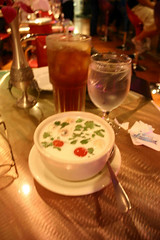
First deciding on the Chicken Pad Ka Pow as an entree I would then choose a seafood soup which was the Tom ka Shrimp soup with mushrooms in lemongrass and galangal broth with coconut milk. And an iced tea with lemon.

I would then inquire of the waitress if there were any issues with me photographing my food when it arrived. She said that it would be OK. Waiting for the first course to arrive I'd fetch a copy of The Washington Blade from the entrance way which I would flip through until the soup arrived. At which time I'd put the Blade on the seat of the chair that was facing me from the other side of the table. Pick up my camera and take a few photos of the soup.

From the first spoonful I was pleasantly surprised and, as Martha Stewart had said, I now love the taste of coconut milk. Rarily will I order seafood 'anything' from restaurants. But, when I return to Thai Tanic again, I'll again order the Tom ka Shrimp soup. Or, if I'm in the mood for 'something new' I'll try some other seafood item and probably one that contains coconut milk.

While I did enjoy the Chicken Pad Ka Pow entree, perhaps, because of the heaviness of the coconut milk which preceeded the entree, the hot chili inspired sauce that flavored the chicken entree was a bit too spicy for my stomach. It is not that I do not like hot chili because I do but it following coconut milk did not go well, in my stomach.

It is not unlike when I drink orange juice after drinking milk. Some people can but I can not drink orange juice after milk. Nor milk after orange juice.

So, when I return again to Thai Tanic unless I'm in the mood for 'something new' I definately would consider ordering the Chicken Pad Ka Pow.

The price for the meal was $20. I left a $5 tip.

When in town or the Logan Circle, may I suggest that you visit Thai Tanic which is located at 1321-A 14th Street in NW WDC. You'll love it! Or, at least, like it! And the coconut inspired Tom ks Shrimp soup is not bad either.

Try it! You'll like it ...!

PG sk8tr, Roughneck, at Thomas Circle

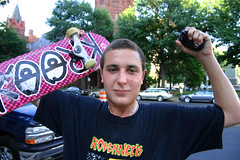
On the evening of 23 July 2006, during my ritual Sunday Photo Walk just north of Thomas Circle on 14th Street when I happened upon two young males and a female skating along the wall at the National City Christian Church I'd inqure if I may photograpah them. This particular skater was much more receptive than was the young black male so while I did get shots of both males since the young black seemed a bit put off by my presence I will not include images in this photoessay of him. And while I did not capture the female since, as a black male, I must be concerned about arosing unwanted and unnecessary suspicion I did mention to her that in the course of my ongoing skaters project I had only come across 3 or 4 female skaters since 1992. She would then reiterate that she is not a skater but just likes to 'hang out' with the boys. Just before dashing off this particular skater would inform me that he is from PG County. To the best of my recollection, he is the first PG County skater that I have captured. While I'm sure there are many, those that I've captured and spoken with, in the past, many who frequent Freedom Plaza claim Montgomery County MD or Nothern VA as their homes. Or NYC and other cities and states throughout the country and from around the world. But, never had any of them said that they were from PG County.

So, as a tribute to him, mainly because of the respect that he showed me I've created the ongoing project, sk8tr Roughneck, which will feature images that I may take of him. Roughneck because roughneck were the letters emblazed on the front of his teeshirt.

But then too, KROOK, appeared on the bottom of his skateboard. So maybe he's known as KROOK. Unitl I see or hear from he's, sk8tr Roughneck.

Respect!